Although equipped with an automatic liquid separator, the volume of cutting fluid drawn in during normal clamping operations is far less than the separator’s separation capacity. Cutting fluid is typically drained every 7-12 minutes. However, after daily use, the vacuum table should be turned 30 degrees counterclockwise from the off position. The valves of the vacuum table’s suction holes will all be turned on, and the vacuum table will enter the vacuum cleaning state. Then, apply clean water to the table’s surface. This water will be drawn into the table and then separated by the liquid separator. However, if the amount of water applied exceeds 5L per minute, the amount will exceed the separator’s separation capacity. A small amount of water will then pass through the separator. The emergency liquid storage cup can collect the clean water that accidentally passes through the liquid separator, providing a reinsurance to prevent liquid from entering the vacuum pump.
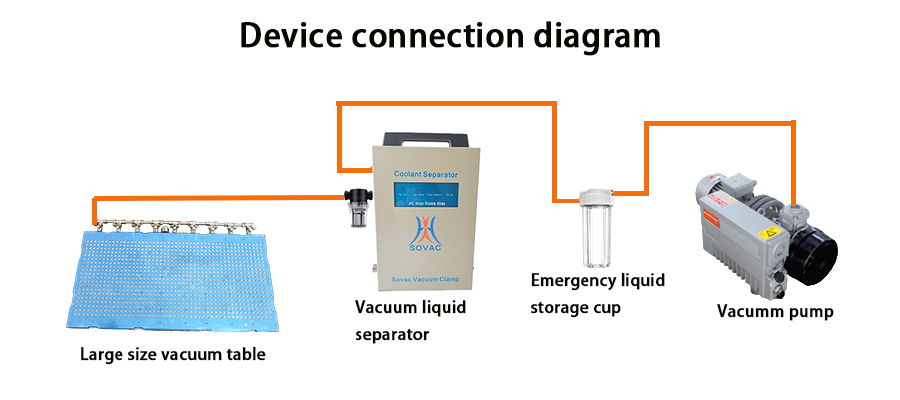
The emergency liquid storage cup is often used with large vacuum tables.
If you’ve been using the vacuum table for a while, mastering the speed of water application during vacuum cleaning can often prevent water from passing through the liquid separator. Installing the emergency liquid storage cup is just an added safeguard. While cleaning the vacuum table, you need to spray water while keeping an eye on whether there’s liquid in the emergency liquid storage cup. If you notice liquid starting to enter the emergency liquid storage cup, slow down the water application rate and give the liquid separator a few seconds or so to process the constant flow of water.
If you find that some liquid has been collected in the emergency liquid storage cup, you should stop in time, unscrew the emergency liquid storage cup, pour out the collected liquid, and then continue to spray clean water on the vacuum table to continue cleaning the vacuum table. The liquid collected in the emergency liquid storage cup will be sucked into the vacuum pump after it slows down.
What are the consequences if the emergency fluid storage cup is not installed?
For first-time SOVAC users, when cleaning a vacuum table, if the water is applied too quickly, the rate at which the water is drawn in will exceed the liquid separation capacity of the liquid separator, causing liquid to enter the vacuum pump or spray out of the vacuum generator exhaust port. See the video link below.
We also shared a video on how to control the speed of water spraying when cleaning a vacuum table.