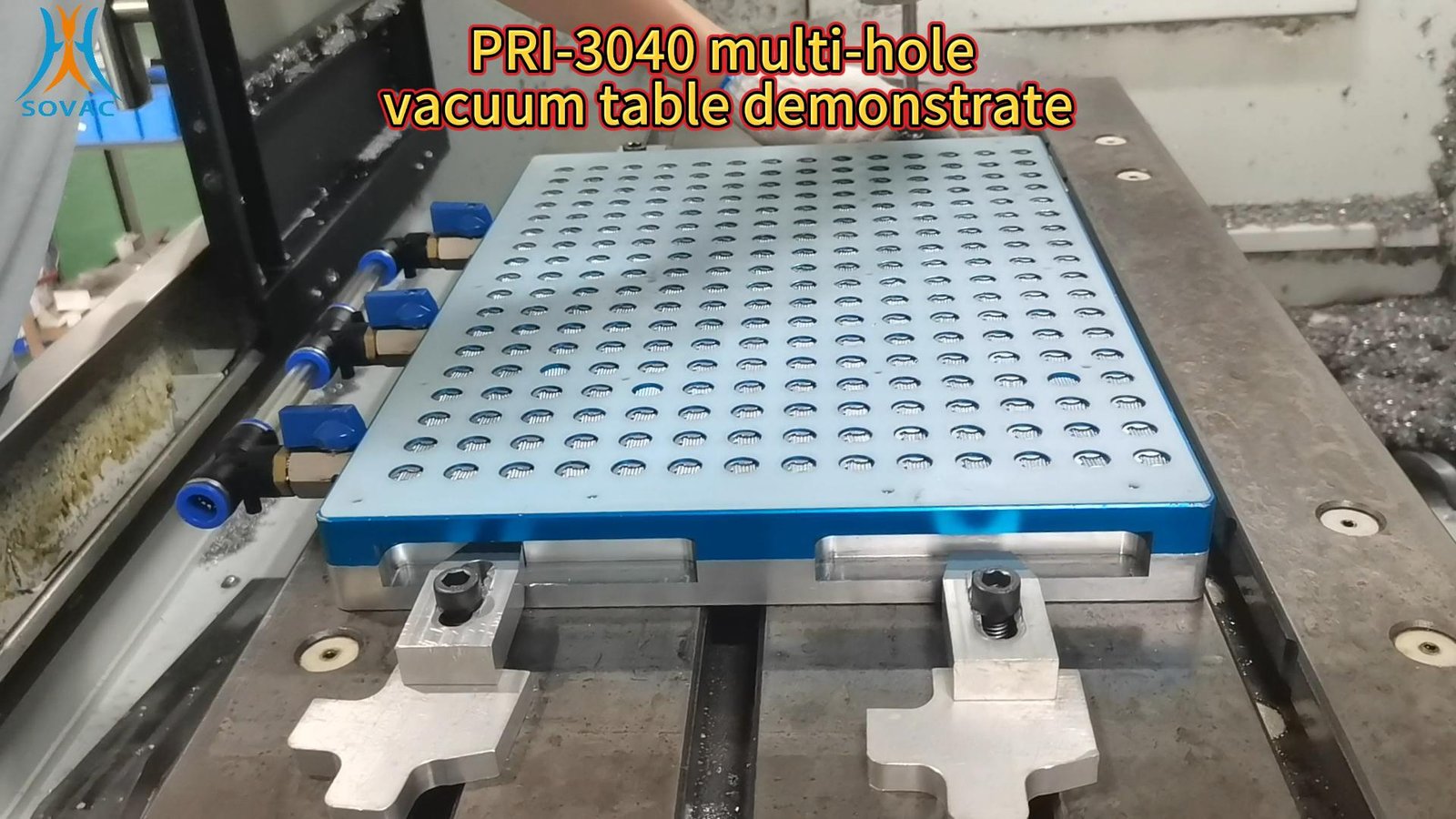
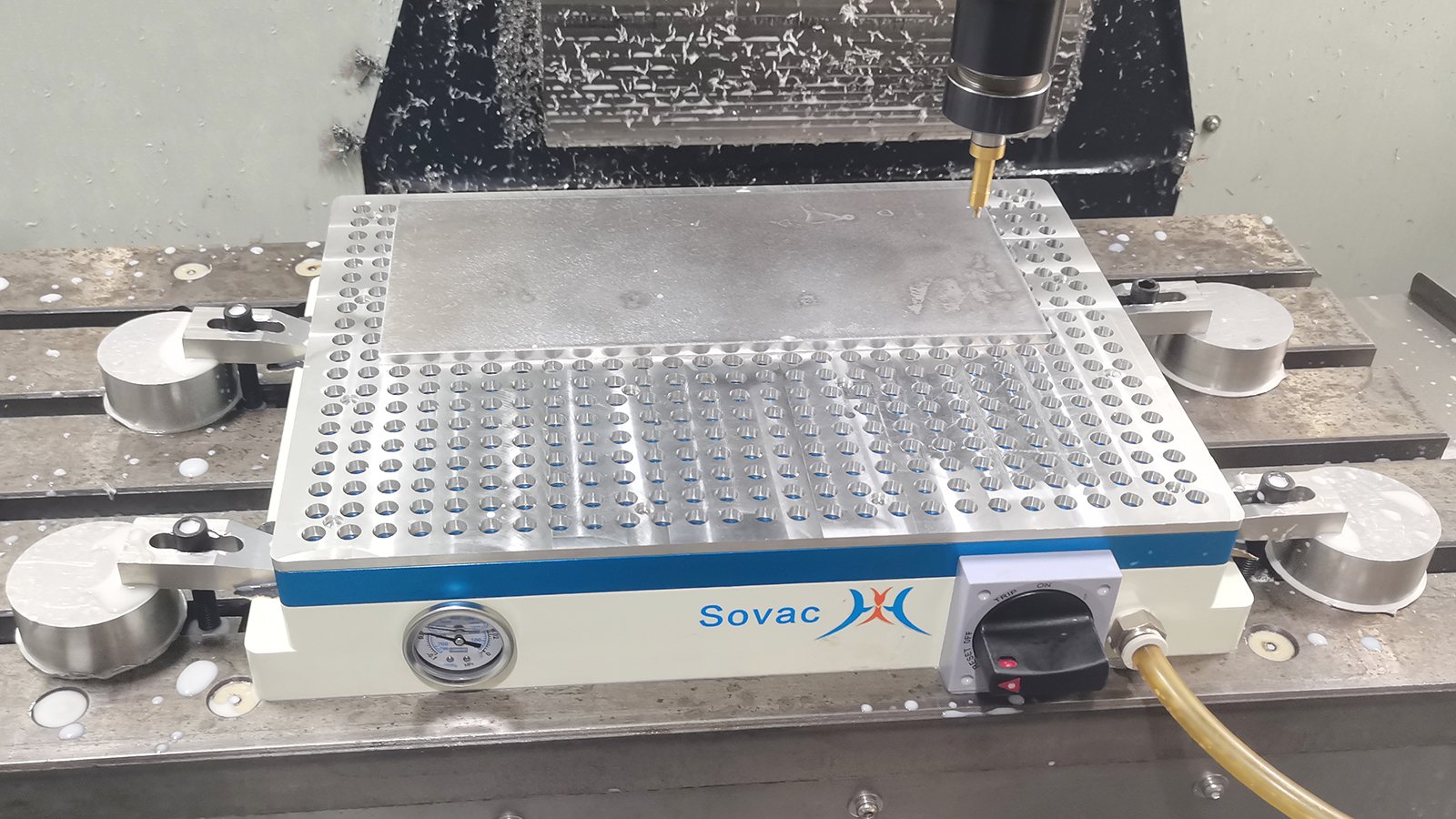
In the CNC machining industry, some precision CNC machining of non-magnetic thin plate workpieces does not require coolant. Furthermore, using a vacuum table allows for more convenient and quick clamping of the workpiece. Is the SOVAC vacuum table suitable for dry machining without coolant? Will the powder and debris generated by dry machining cause the suction holes of the SOVAC vacuum table to become clogged and ineffective?

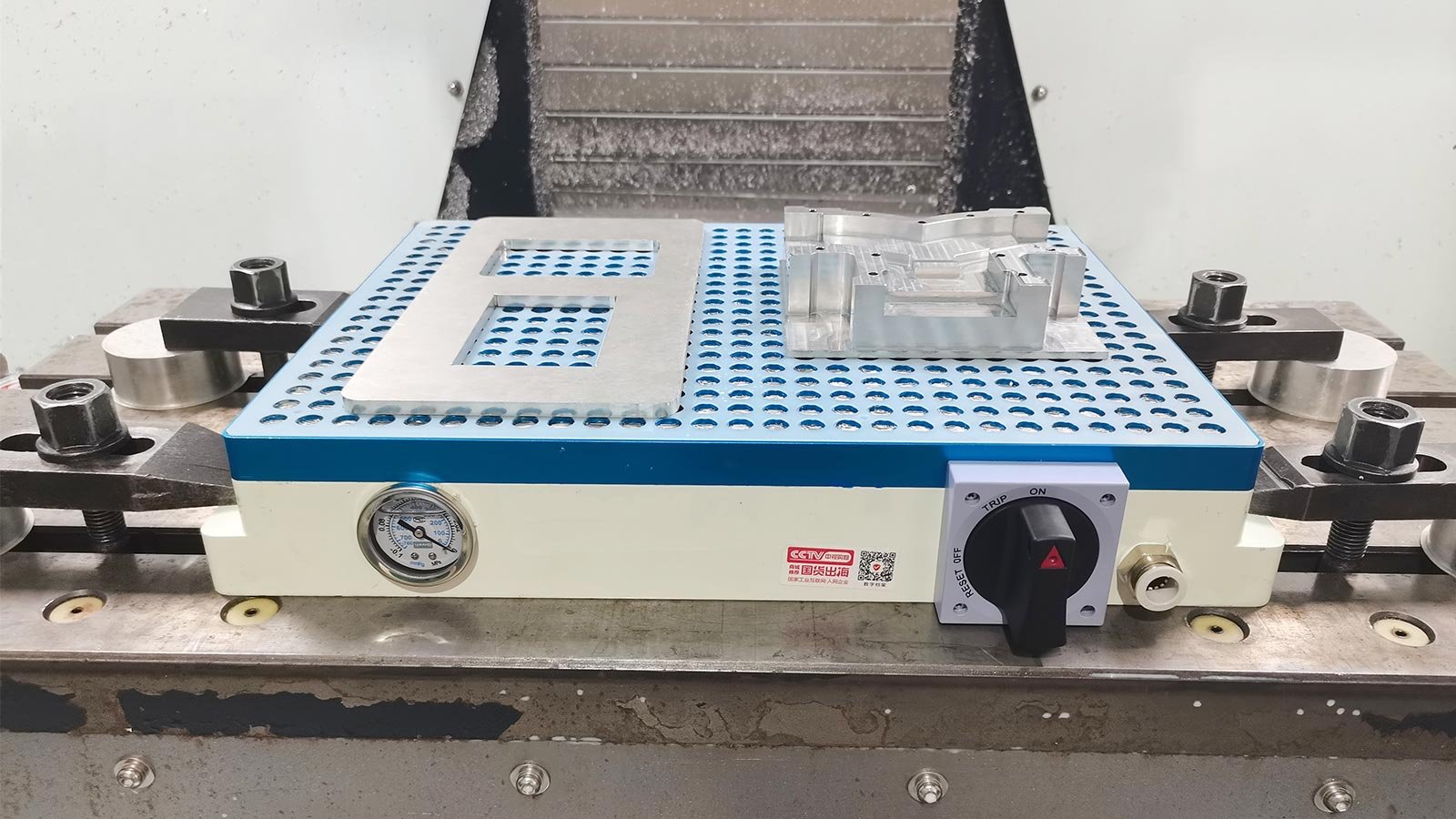
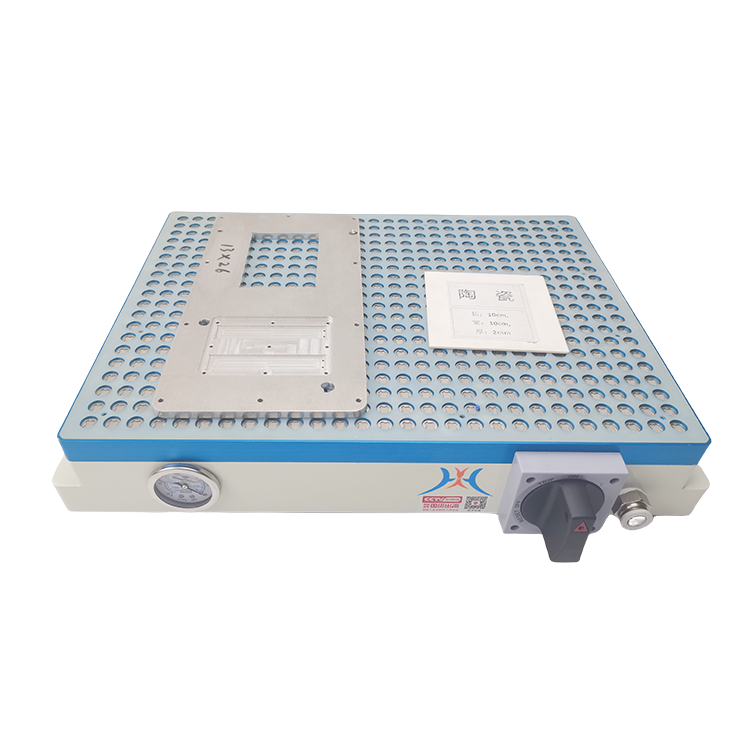
First, let me explain how the SOVAC vacuum table works. Unlike traditional grid vacuum tables and sealed rope vacuum tables, the SOVAC table is composed of hundreds of suction holes arranged in a matrix pattern. Each suction hole houses a pressure differential sensing valve. When no workpiece is placed, the switch is turned on, and vacuum air rapidly enters the vacuum table’s cavity, creating a pressure differential at each suction hole, causing all valves to close instantly. This prevents vacuum loss. When a workpiece is placed in a limited area, the switch is turned on, and vacuum air rapidly enters the table’s cavity, creating a pressure differential only within the suction holes in the area not covered by the workpiece. At this time, the suction holes not covered by the workpiece will be completely blocked, while the suction holes covered by the workpiece will form an air pressure difference between the upper and lower sides of the workpiece due to the continuous presence of vacuum air. The vacuum clamping force of SOVAC comes from this air pressure difference.

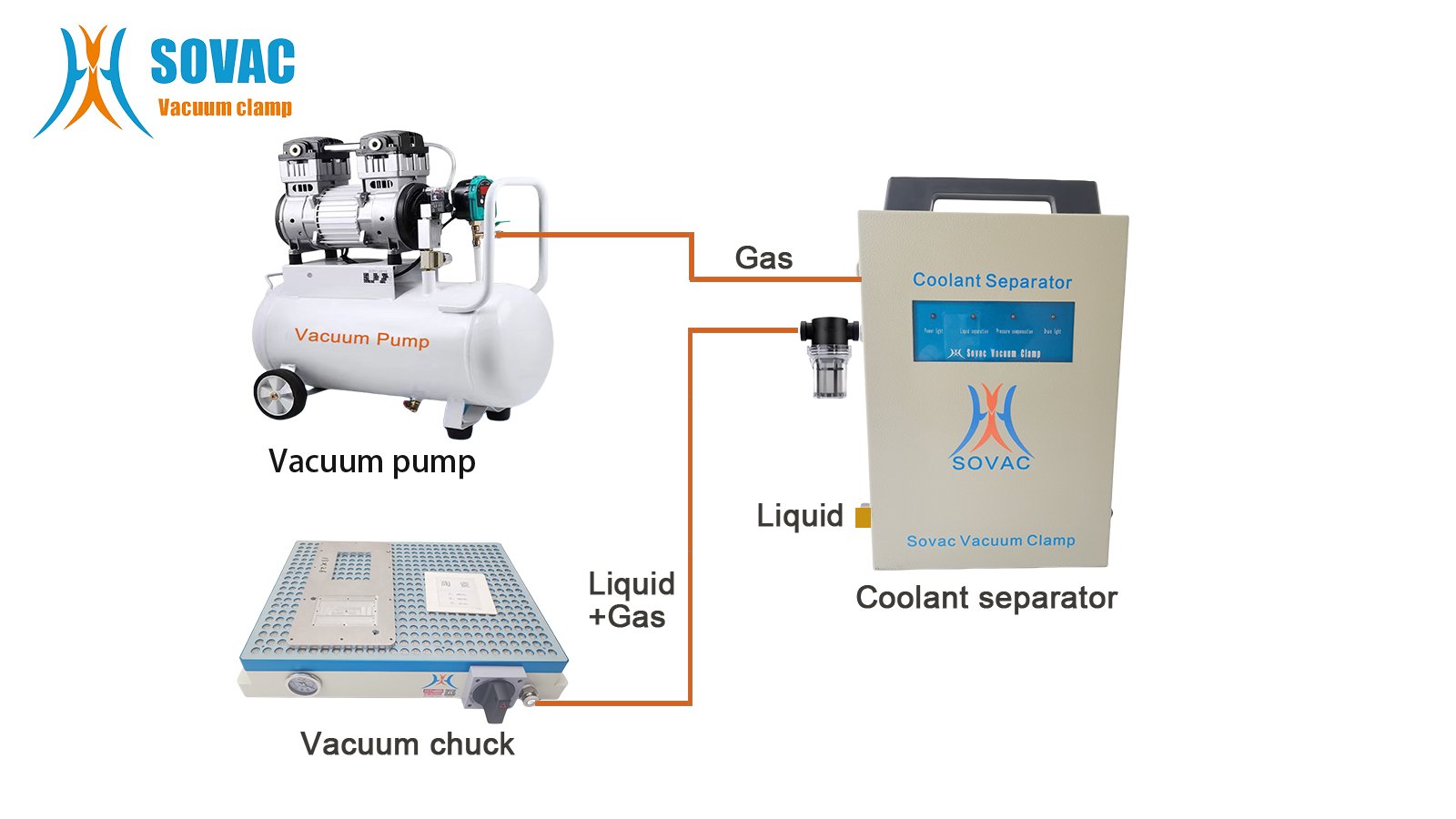
If cutting fluid is sprayed during machining to cool the cutting tool, this cutting fluid will not be drawn into the vacuum table through the suction holes uncovered by the workpiece because these holes are completely blocked. Only a small amount of cutting fluid and fine cutting chips are drawn in through the gap between the workpiece and the clamping surface of the vacuum table. The amount of cutting fluid and fine cutting chips drawn in is very small. However, to prevent this cutting fluid and fine cutting chips from being drawn into the vacuum pump, a cutting fluid and chip collection device is typically installed between the vacuum table and the vacuum pump. If cutting fluid is not sprayed during machining, this type of machining without cutting fluid is generally referred to as dry machining. Using a SOVAC vacuum table, a small amount of powder will still be drawn into the vacuum table through the gap between the workpiece and the clamping surface. Common materials used for this type of dry machining include graphite, ceramics, and PCBs. The vacuum table operation methods differ between wet and dry machining processes.

Let’s first explain the wet machining method. Since cutting fluid is continuously sprayed from the universal cooling tube during machining, the resulting chips are easily washed away by the water flow. The resulting chips roll off the vacuum table and workpiece, preventing them from accumulating on the table surface. However, during dry machining, if a dust guard is not used, dry powder produced by cutting can accumulate on the table surface.
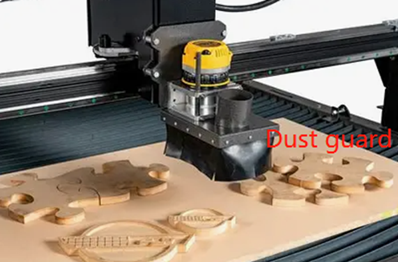
Without a dust guard, the lifespan of the vacuum table will be greatly reduced. If a dust removal device is not available, we need to use a dust blower to blow away the accumulated dry powder after machining the workpiece. Ensure that the powder is blown away completely before turning off the vacuum table. This will reduce the amount of powder that falls into the vacuum table cavity.
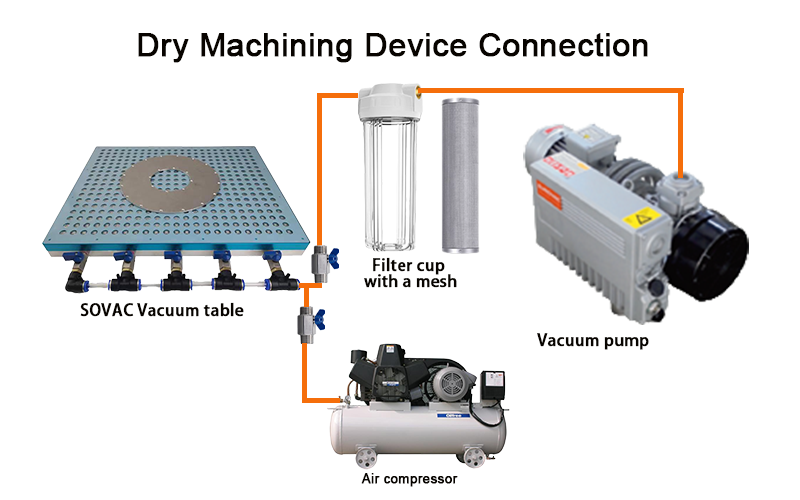
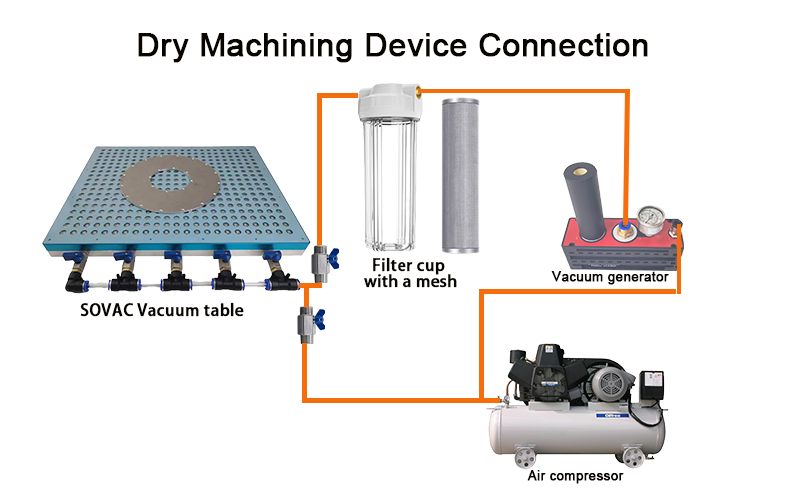
When dry machining a workpiece, a filter cup with a mesh is installed between the vacuum table and the vacuum pump. The mesh size of the filter screen should be determined based on the workpiece material being machined. The mesh size of the filter screen should be selected based on the particle size of the chip generated during machining. While using a vacuum generator can reduce damage to the vacuum acquisition equipment caused by powder and debris, it does compromise clamping force. Choosing the right vacuum acquisition equipment depends on the size of the workpiece. For large workpieces with less stringent clamping requirements, a vacuum generator can be an option.
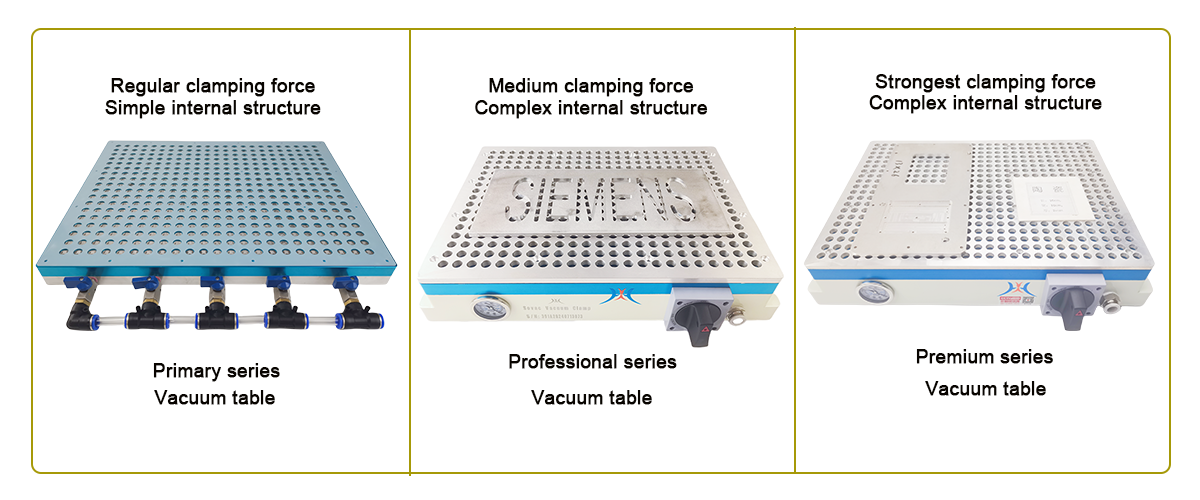
SOVAC vacuum tables come in three series: Primary, Professional, and Premium. Choosing the most appropriate series of vacuum tables is crucial for machining workpieces of varying materials. For dry machining, the Primary series is generally recommended. This series features a simpler interior and is well-suited for environments with high concentrations of dry powder.
Small amounts of powder debris will be sucked into the vacuum table through the horizontal gap between the workpiece and the clamping surface. These debris are sucked in from these suction hole below the workpiece. Since the minimum flow area of the SOVAC suction hole valve is a circular channel with a diameter of 2mm, powder debris with a diameter much smaller than 2mm will not cause the suction hole valve to become clogged and fail. However, during use, it is still required to connect the vacuum table to compressed air. After machining each workpiece, use a dust blower to blow away the powder debris scattered on the surface of the vacuum table, then turn off the vacuum table, and then connect compressed air to back blow the vacuum table. This ensures the cleanliness of the interior of the vacuum table and extends the service life of the vacuum table.

The above is the operating method for using the SOVAC vacuum table to dry machining workpieces. If you need to use the vacuum table to dry machining non-magnetic thin plates, please send an email for consultation.
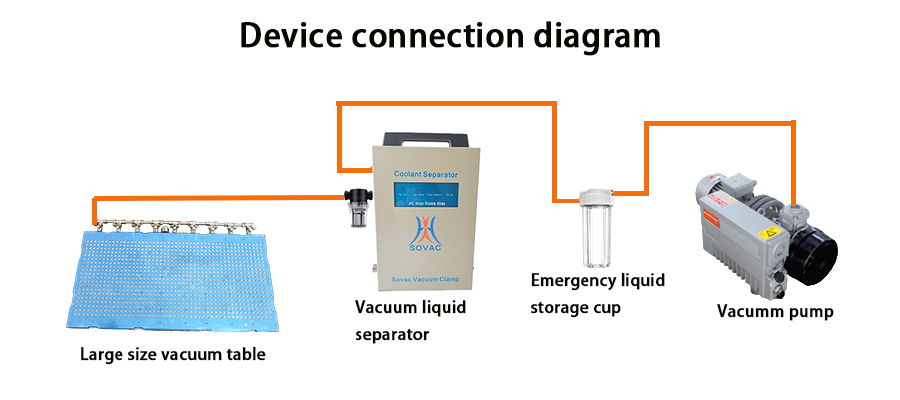
Although equipped with an automatic liquid separator, the volume of cutting fluid drawn in during normal clamping operations is far less than the separator’s separation capacity. Cutting fluid is typically drained every 7-12 minutes. However, after daily use, the vacuum table should be turned 30 degrees counterclockwise from the off position. The valves of the vacuum table’s suction holes will all be turned on, and the vacuum table will enter the vacuum cleaning state. Then, apply clean water to the table’s surface. This water will be drawn into the table and then separated by the liquid separator. However, if the amount of water applied exceeds 5L per minute, the amount will exceed the separator’s separation capacity. A small amount of water will then pass through the separator. The emergency liquid storage cup can collect the clean water that accidentally passes through the liquid separator, providing a reinsurance to prevent liquid from entering the vacuum pump.

The emergency liquid storage cup is often used with large vacuum tables.

If you’ve been using the vacuum table for a while, mastering the speed of water application during vacuum cleaning can often prevent water from passing through the liquid separator. Installing the emergency liquid storage cup is just an added safeguard. While cleaning the vacuum table, you need to spray water while keeping an eye on whether there’s liquid in the emergency liquid storage cup. If you notice liquid starting to enter the emergency liquid storage cup, slow down the water application rate and give the liquid separator a few seconds or so to process the constant flow of water.

If you find that some liquid has been collected in the emergency liquid storage cup, you should stop in time, unscrew the emergency liquid storage cup, pour out the collected liquid, and then continue to spray clean water on the vacuum table to continue cleaning the vacuum table. The liquid collected in the emergency liquid storage cup will be sucked into the vacuum pump after it slows down.

What are the consequences if the emergency fluid storage cup is not installed?

For first-time SOVAC users, when cleaning a vacuum table, if the water is applied too quickly, the rate at which the water is drawn in will exceed the liquid separation capacity of the liquid separator, causing liquid to enter the vacuum pump or spray out of the vacuum generator exhaust port. See the video link below.

We also shared a video on how to control the speed of water spraying when cleaning a vacuum table.

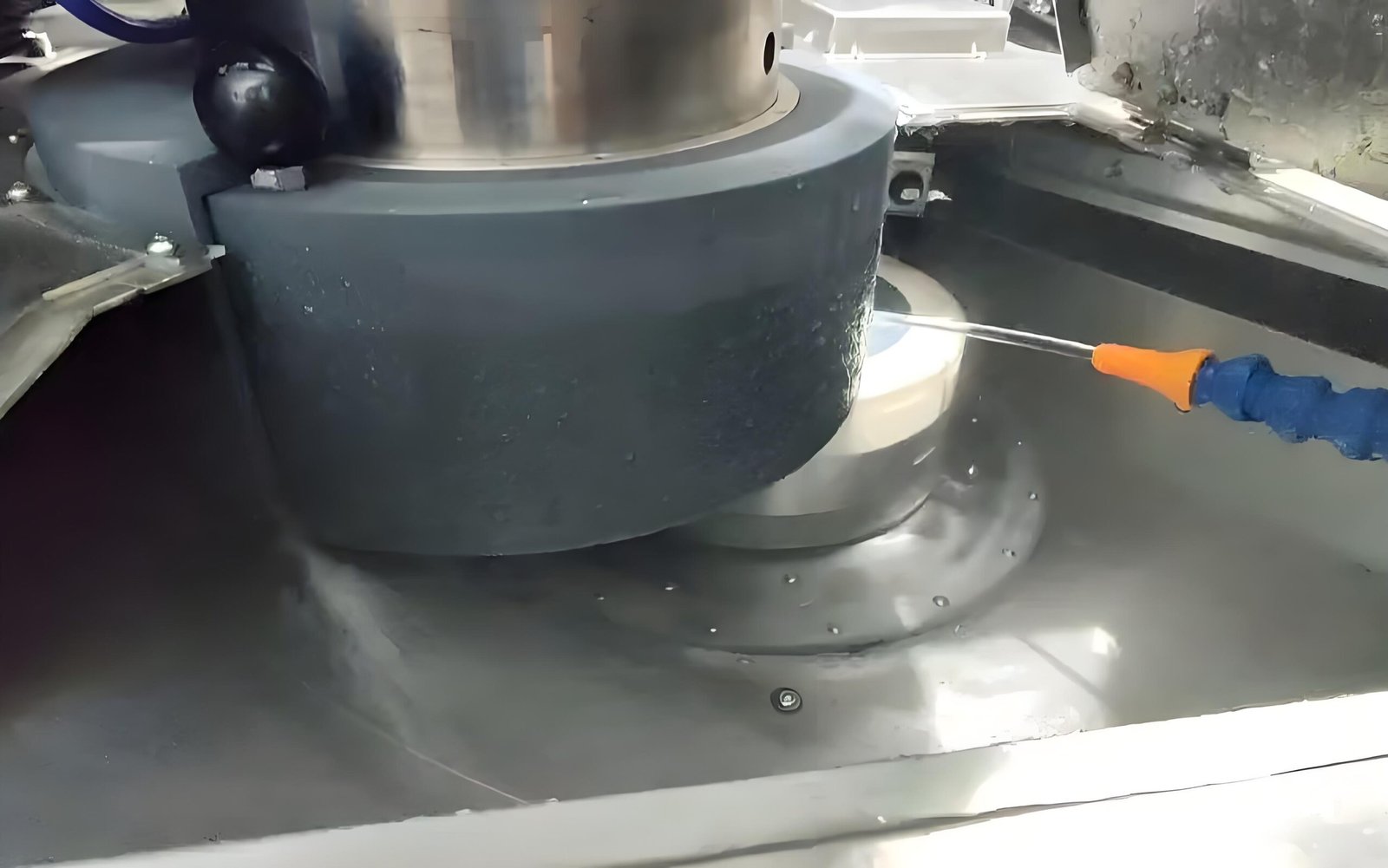
In precision surface grinding, we often encounter some non-magnetic thin plate materials that need to be surface ground, but how to firmly clamp these thin plate materials brings challenges to engineers. For example, ceramics, silicon carbide, non-ferrous metals, glass, quartz and other materials with a thickness of 0.5mm to 5mm. When surface grinding the above materials, if you choose to apply glue, wax sticking method or use permanent magnetic chuck. Although it can solve the grinding of some parts, there are still many cases where it is not appropriate to use the above methods for clamping. In this regard, we have developed an automatic valve multi-hole vacuum table that can be used to quickly clamp the above non-magnetic thin plate materials. It can achieve fast vacuum clamping of thin plates or ultra-thin materials such as ceramics, silicon carbide, non-ferrous metals, glass, quartz, etc. with a thickness of 0.5mm to 5mm. Generally, the clamping action can be completed in 5 seconds, and the workpiece can be released within 5 seconds. At the same time, it will not cause chemical or physical pollution to these workpieces.

Automatic Valve Multi-hole Vacuum Table for Surface Grinding has the following features:

  1. sufficient clamping force can be obtained as long as the workpiece is covered with a certain number of suction holes.
  2. one vacuum table can meet the clamping needs of several sizes of workpieces.
  3. The size of suction holes can be customized to meet the clamping needs of ultra-thin workpieces.
  4. Both wet and dry grinding can be used.
  5. The grinding debris generated will not cause the suction holes of the vacuum table to be clogged and fail.
  6. It can be customized into a round rotatable vacuum table or positioned into a rectangular vacuum table.
  7. The precision of the suction surface can be customized and processed. It meets the precision requirement of 1 micron to 100 micron precision.

This automatic valve multi-hole vacuum table for surface grinding can be applied to vertical axis surface grinder and horizontal axis surface grinder.

Horizontal axis surface grinding machine case video:

Vertical axis surface grinding machine case video:

Regarding the precision control of the surface grinder, it is generally controlled from the material of the body of the vacuum table and the material of the adsorption surface. If the method of wet grinding is used, the material that is not easy to rust is generally chosen as the adsorption working surface. According to the precision requirements, you can choose aluminum alloy or 3Cr13 stainless steel. It is not easy to choose Q235 or #45 steel these materials that are easy to rust. The production cost of different materials of the body will vary greatly.

Regarding some brittle and ultra-thin materials, it is recommended to customize the diameter of the suction holes to Φ1mm ~ Φ2mm suction holes, which can improve the support of the adsorption surface and prevent the brittle materials from rupturing. For example, 0.5mm~1mm thick ceramics, glass and quartz thin plate. All need to make such customized design.

In the selection of the vacuum table, we have to make a comprehensive consideration from many aspects, such as the contact method between the grinding wheel of the surface grinder and the workpiece, whether or not to use coolant, the composition of the coolant, the thickness of the workpiece, the material of the workpiece, the size of the workpiece, the brittleness of the workpiece, and so on. Regarding the selection of vacuum table, it is recommended to contact the technical engineer of the manufacturer of automatic valve mult-hole vacuum table for detailed pre-sales consultation.

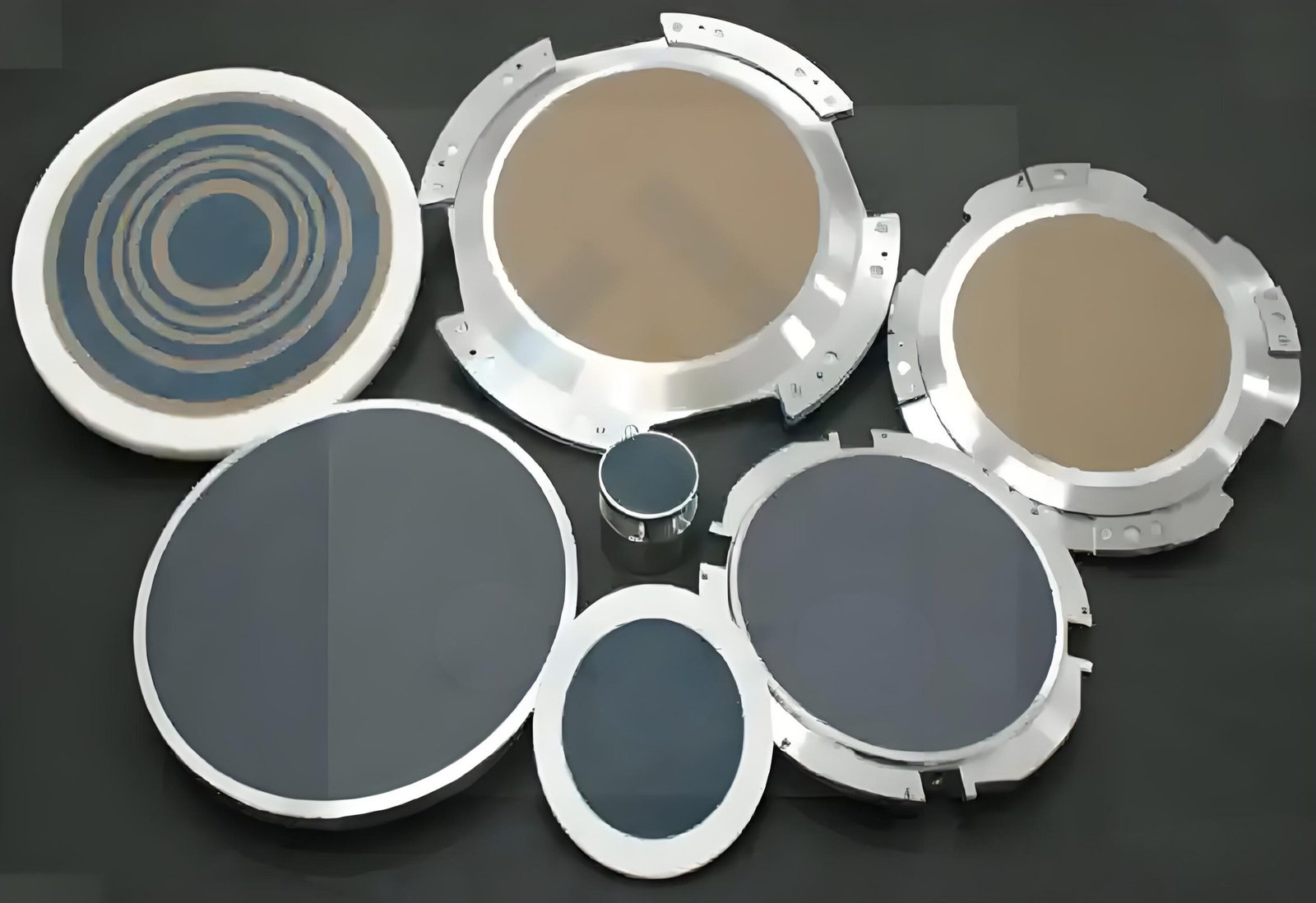
In the ultra-thin wafer grinding or thinning process, porous ceramic vacuum chucks are often used to achieve flat fixation and clamping of wafers. Coolant or clean water is also used in the grinding process. Since the wafer cannot cover the entire adsorption area of ​​the porous vacuum chuck, some coolant or clean water will be quickly sucked into the porous ceramic vacuum chuck. If the sucked liquid is not separated, it will be transported to the inside of the vacuum pump, thereby damaging the vacuum pump. The vacuum pump cannot work properly. Therefore, we need a device that can automatically separate the liquid sucked into the porous ceramic vacuum chuck. Generally, the automatic vacuum liquid separator (model: CS-SM-220) is the best choice.

In actual use, we found some problems. The vacuum flow rate inside the porous vacuum chucks is relatively large, and the high flow rate of air will affect the separation effect of the automatic vacuum liquid separator. This is mainly because the high flow rate of air causes the liquid to atomize and vibrate. The CS-SM-220 automatic vacuum liquid separator is based on the principle of gravity to achieve the separation of vacuum air and liquid. The rapid flow of vacuum air causes the liquid to have no chance to settle and is directly transported to the hose connected to the vacuum pump. As a result, some liquids cannot be effectively separated, and the liquid separation effect is poor.

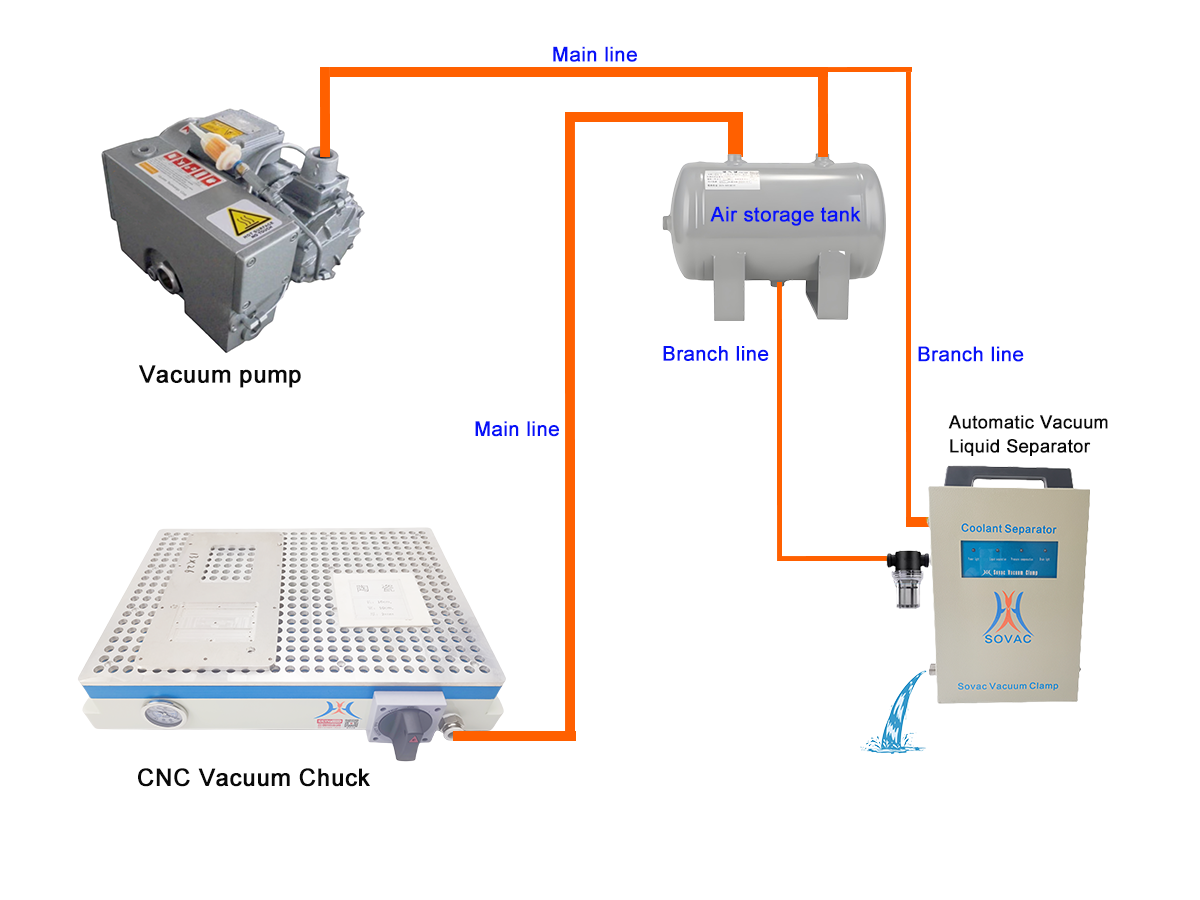
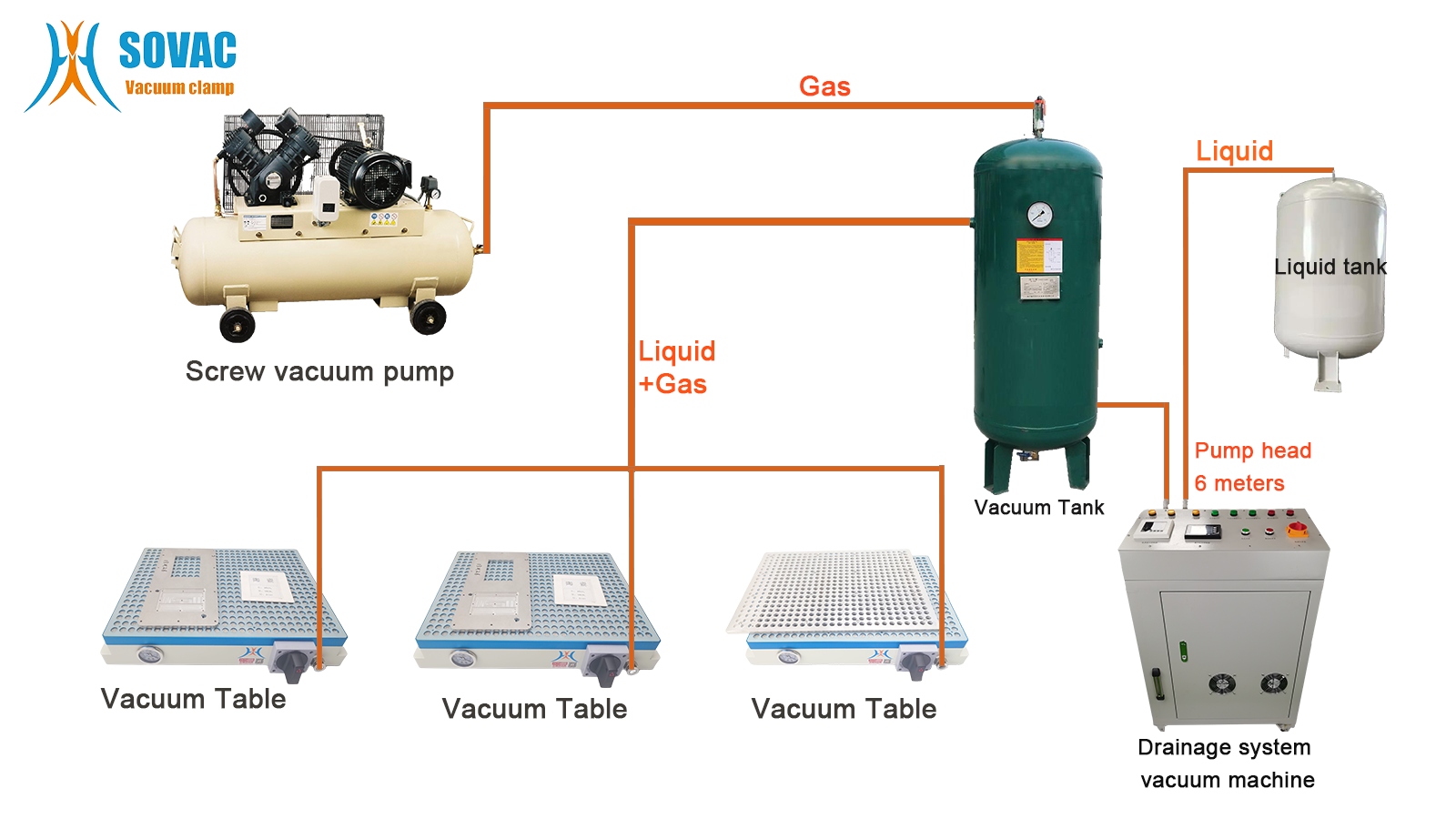
However, this is not an unsolvable problem. Our solution is to connect air tank to the main line to create a larger space so that the liquid and vacuum air can be fully separated. Let the liquid be collected at the bottom of the air tank, and connect the CS-SM-220 automatic vacuum liquid separator to the drainage outlet at the bottom of the air tank. This ensures that the liquid can settle thoroughly without limiting the inner diameter of the main line.

The specific equipment connection method is as shown in the figure below:

Since the inner diameter of the main line has not become smaller, the vacuum flow required by the porous vacuum chucks is not limited, ensuring the clamping force of the porous ceramic vacuum chucks. At the same time, the CS-SM-220 automatic vacuum liquid separator will not lose vacuum during the separation of liquid. This ensures the stable and constant clamping force of the porous vacuum chucks from two aspects. Since the CS-SM-220 automatic vacuum liquid separator can automatically separate liquid, there is no need to stop the machine to discharge liquid during the entire process of grinding the wafer.

However, there is a requirement for the combined use of this air storage tank and the CS-SM-220 automatic vacuum liquid separator. The height of the air storage tank must be higher than the automatic vacuum liquid separator, and the inner diameter of the hose of the main line must be larger than the inner diameter of the branch line connected to the automatic vacuum liquid separator. In this way, two hoses are connected in parallel, and the pipelines with large and small inner diameters are divided. It can achieve more vacuum air passing through the main line and less vacuum air passing through the branch line. It is recommended that the air storage tank should be no less than 10L. The above two requirements are guaranteed. It can achieve full automatic separation of liquid in high-flow vacuum air. If you have any questions, please send an email to communicate.

The auto-valve multi-hole vacuum table is a new type of vacuum table. It is different from the traditional grid vacuum table and groove vacuum table, and it is also different from the multi-hole vacuum table that covers the air suction holes on the periphery of the workpiece with soft rubber pads. An automatic valve is designed inside each air suction hole to automatically close or open according to the air pressure difference.

When the workpiece is placed on the surface of the auto-valve multi-hole vacuum table and the vacuum switch is turned on, the vacuum will instantly enter the auto-valve multi-hole vacuum table. Because the air suction holes on the periphery of the workpiece are exposed to the air, the pressure difference formed instantly causes the internal valve to close. The suction holes covered by the workpiece cannot be closed because the atmospheric pressure is blocked by the workpiece, and the vacuum will pass through the valve and rise to the lower surface of the workpiece. In this way, a pressure difference is formed on the upper and lower sides of the workpiece. And the more suction holes covered by the workpiece, the greater the pressure generated. This is the working principle of the auto-valve multi-hole vacuum table.

What are the advantages of the auto-valve multi-hole vacuum table? Mainly in the following aspects.

  1. There is no need to install sealing ropes, and there is no need to cover the suction holes that are not covered by the workpiece, which improves the clamping speed.
  2. For ultra-thin (0.3-5mm) workpieces, such as glass, silicon carbide, ceramics, and PCB boards with holes in the semiconductor industry, it can ensure that the workpiece maintains good flatness during the entire clamping process to avoid warping.
  3. It can clamp thin plates with holes, and the workpiece can be milled through during processing without reserving a certain thickness of the bottom.
  4. The automatic valve multi-hole vacuum table can be upgraded to a semi-automatic vacuum workbench controlled by PLC.
  5. It can be used on a rotary surface grinder or thinning machine. There is no need to worry about the suction hole being blocked and failing.
  6. It can be used on a large-size workbench in a four-axis machining center. (The vacuum hose interface will be designed in the center of the bottom of the auto-valve multi-hole vacuum table)
  7. Due to the combined design of the auto-valve multi-hole vacuum table body and the replaceable aluminum alloy plate, the aluminum alloy replacement plate can mill the surface to ensure the flatness of the adsorption table and the verticality of the spindle, and the processing accuracy of the workpiece is relatively high. The drill is allowed to mill through the workpiece without reserving a certain thickness of the bottom.
  8. For some workpieces that use grid vacuum tables and are inconvenient to install sealing strips to clamp the workpieces, the auto-valve multi-hole vacuum table can do the job well.
  9. You can boldly turn on the coolant to cool the cutting tool.

What are the disadvantages of the auto-valve multi-hole vacuum table?

  1. Since the effective pressure difference area is smaller than that of the grid vacuum table, the suction force is not as strong as the clamping force of the traditional grid vacuum table, and the feed parameters of the tool need to be controlled.
  2. Since there is no sealing rope, the speed at which the cutting fluid is sucked into the auto-valve multi-hole vacuum table will be much faster than that of the grid vacuum table, and a coolant separation device needs to be installed. In this regard, our company has specially developed a portable vacuum pump automatic liquid separator.
  3. Since it is necessary to provide sufficient instantaneous pressure difference for all valves inside the suction hole at the moment of turning on the switch, and a small amount of air will enter from the gap between the workpiece and the auto-valve multi-hole vacuum table surface, a large-displacement vacuum pump needs to be configured. Of course, the ultimate vacuum degree of the vacuum pump is close to -100KP (760mmHg) is the best. Traditional grid vacuum tables do not need to consider starting hundreds of valves, so high vacuum and low flow rate vacuum are generally used. In most cases, a vacuum generator can do the job. However, using an automatic valve porous vacuum suction cup may require users to purchase a new vacuum pump.
  4. Due to the more complex internal structure, the cost is definitely more expensive than the grid vacuum table.
  5. If the internal valve design is unreasonable, there is a risk of blockage and failure of the suction hole during long-term use.

What is special about auto-valve multi-hole vacuum table from SOVAC?

  1. The internal valve adopts a spring-free structure, which is a smart design. In 2019, we designed a spring-structured valve, but we found that the spring-structured valve has fatal defects. It has the problem of spring fatigue failure after a period of use, and the filter screen of the suction hole cannot be blocked. However, the non-spring structure valve we developed can solve this problem well. Therefore, the auto-valve multi-hole vacuum table produced by our company can be used on a surface grinder to grind some ceramics, graphite, fiberglass and other materials. So that these materials will produce a lot of powdery debris during milling or grinding. But it can still avoid clogging.
  2. The world’s only vacuum table body base and replacement plate combination design is adopted. This design can well protect the body of the auto-valve multi-hole vacuum table from being damaged by the cutting tool. At the same time, it allows the workpiece to be completely milled through. The overcutting cutting tool will leave a very shallow groove on the surface of the replacement plate. After using it for a period of time, we only need to mill the surface of the replacement plate again. When the thickness of the replacement plate is insufficient after a period of use, the user can process a new replacement plate according to the electronic drawing of the replacement plate provided by us. No spare parts need to be purchased from the manufacturer. The material of this replacement plate can be replaced with other materials besides aluminum alloy as needed.
  3. Automatic cleaning design is adopted. After the auto-valve multi-hole vacuum table is used for one day, we only need to rotate the switch to the half-open position. At this time, the auto-valve multi-hole vacuum table will automatically exhaust. Sprinkle some clean water on the surface of the auto-valve multi-hole vacuum table, and the clean water will be quickly drawn into the interior of the auto-valve multi-hole vacuum table, and the internal valve and the inner cavity of the auto-valve multi-hole vacuum table will be cleaned. This top-down cleaning method can achieve a good cleaning effect.
  4. Splicing structure design is adopted. When the user buys a smaller auto-valve multi-hole vacuum table, he suddenly encounters some large-sized parts that need to be processed. We do not need to clamp a larger-sized auto-valve multi-hole vacuum table, but purchase an auto-valve multi-hole vacuum table interface of the same size and model. Two auto-valve multi-hole vacuum tables can be spliced. It can be spliced ​​along the wide side or along the long side. This allows us to get a auto-valve multi-hole vacuum table with a wider clamping range at a lower cost.
  5. We have equipped the auto-valve multi-hole vacuum table with a vacuum automatic coolant separator. This will prevent the cutting fluid sucked into the auto-valve multi-hole vacuum table from entering the vacuum. It protects the vacuum pump well. The separated cutting fluid can be automatically separated and sent back to the sink of the machining center. This is much more convenient than using a large manual volume tank.
  6. Small suction holes can be designed by designing the size of the perforated holes of the replacement plate. This is very necessary when clamping some brittle or flexible thin plate materials.
  7. The suction force of a single suction hole can be customized according to the needs of the user. For example, a gold foil or a flexible thin sheet can be designed with a small suction force. Ensure that the thin sheet is not deformed or dented by suction.

How should we choose a vacuum pump for the auto-valve multi-hole vacuum table?

As mentioned above, traditional vacuum generators or small-displacement vacuum pumps may not be competent, so it is best to consult us or our dealers about the selection of vacuum pumps before purchasing. I especially recommend oil-lubricated rotary vane vacuum pumps. Its high flow rate and high vacuum performance can well meet the use requirements of our auto-valve multi-hole vacuum table. Generally, the limit vacuum pump of the vacuum pump is required to be above -95KPa. The flow rate of vacuum is greater than 220L/min (13.2m³/h). If we use a vacuum generator, we need to choose a vacuum generator with a large flow rate. According to the Venturi tube principle, this will consume a lot of compressed gas, and this solution is very energy-consuming. It can be used for short-term emergency use, but it is not recommended for long-term use.

Which workpieces do the auto-valve multi-hole vacuum table can better play its advantages when processing?

  1. Ultra-thin workpieces (thickness 0.3mm~10mm), the entire adsorption working surface has a good flatness, and high-precision processing can be obtained for some ultra-thin workpieces. When installing the replacement plate, the workpiece processing progress can reach 0.01mm)
  2. The workpiece already has some through holes before processing, which is not suitable for grid vacuum table clamping.
  3. Rotary surface grinder for ultra-thin workpiece clamping and grinding.
  4. For some flexible materials, such as flexible printed circuit boards. It does not require strong suction, but requires good flatness of the adsorption surface.

If you have any questions about this auto-valve multi-hole vacuum table, please feel free to contact our engineers.

Release by Ditrong Dai (Email:ditrong@outlook.com)

Vacuum automatic liquid separators are becoming increasingly indispensable in the CNC machining industry. In the machining industry, if we process and clamp non-magnetic thin plate workpieces, we may use CNC multi-hole vacuum tables. This multi-hole vacuum table will be accompanied by a small amount of debris and cutting fluid being sucked into the multi-hole vacuum table during the actual adsorption work. 

Since the negative pressure air source of the multi-hole vacuum table is usually provided by a vacuum pump and a vacuum generator, the vacuum table and the negative pressure  source equipment are connected through an air pipe. The tiny debris and coolant entering the vacuum table will enter the gas tank of the negative pressure gas source equipment without intervention. Damage the vacuum pump or vacuum generator. Therefore, we must install a vacuum liquid separator between the multi-hole vacuum table and the negative pressure gas source equipment.

Regarding this vacuum liquid separator, the previous practice is usually to install a manual drain tank, but this manual drain tank requires manual regular drainage, and also takes up space. The inner wall of this drain tank is not made of corrosion-resistant material. After a period of use or a long period of accumulation of liquid, a large amount of rust will be generated. If a larger CNC vacuum table is used and large workpieces are processed, manual drainage will be more frequent. Currently, one machine operator monitors several machines and has to pay attention to the liquid level of the manual drain tank. This is not an ideal solution.

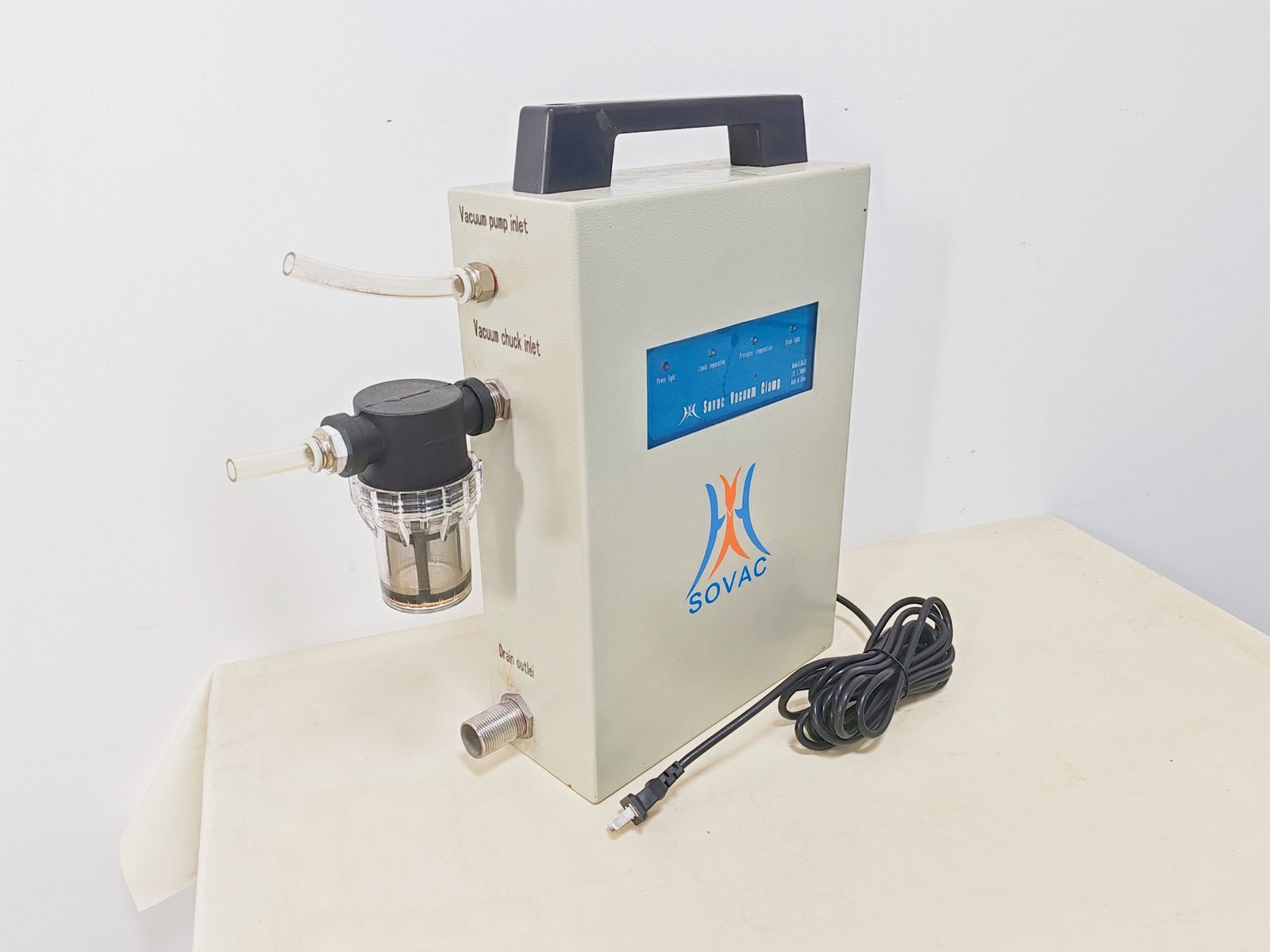
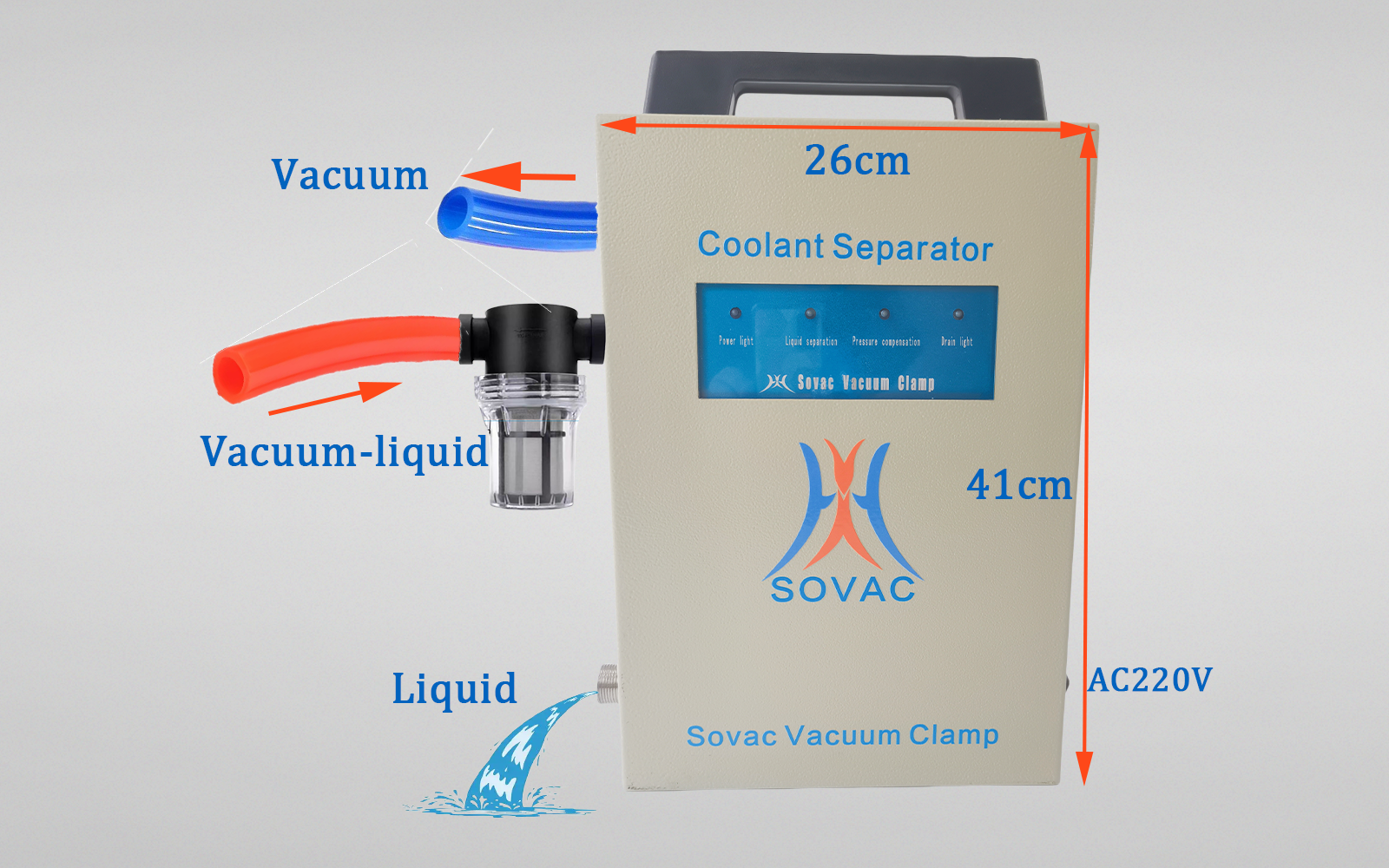
With this in mind, the SOVAC VACUUM CLAMP team has finally developed a small and intelligent portable vacuum automatic liquid separator after 1 year of research and development. We can also call it a vacuum intelligent drainer or vacuum intelligent draine separator.

This new vacuum automatic liquid separator system has the following advantages:

  1. Small size and does not take up space.

In normal use, it can be placed inside the CNC machining center, so that the discharged liquid is discharged into the CNC machining center. It can also be placed on the sink behind the CNC machining center.

  1. Wide range of negative pressure adaptation.

It can be used in the range of 0~-0.1MPa(1bar). Since the drainage mechanism has nothing to do with the negative pressure value, it can be applied to a wider range of negative pressure.

  1. Intelligent drainage.

There are only two air pipes, which can be connected to the CNC multi-hole vacuum table and the vacuum pump respectively, without any manual settings. It can work normally after powering on. The frequency of drainage will change with the amount of liquid pumped in. The faster the amount of liquid pumped in, the shorter the drainage cycle. It is adaptively adjusted. According to previous experience, drainage is generally performed once every 4-7 minutes.

  1. Intelligent pressure maintenance without pressure drop.

The vacuum pressure will not drop during the drainage process.

  1. Dual-layer protection of debris filtration.

The air and liquid will pass through the filter cup before entering the vacuum automatic liquid separator. The debris from the CNC multi-hole vacuum table will first be filtered in the filter cup. There is also a backwashing function inside, which is generally not used. In the extreme case, it is automatically cleaned in the working state with the positive pressure air pipe as above.

  1. Energy-saving and silent.

The working voltage of the vacuum automatic drainer is 220V and the power is 6W. It is very energy-saving. There will be no noise during the drainage process.

  1. High reliability and zero maintenance.

This product is designed according to the standard of 5-year maintenance-free. 

Vacuum automatic liquid separator parameters

Product nameVacuum Automatic Liquid Separator
ModelCS-SM-220
VoltageAC220V Single phase 50Hz 6W
Protection gradeIPX7
Drainage interval timeSetup free, adaptive adjustment
Maximum liquid separation rate5.2L/min(1.4GPM)
Maximum flow rate700L/min(25CFM)
Working temperature0~300℃(572°F)
Operating pressure range0~-100KPa(-750mmHg)
MaterialSUS304 stainless steel inner cavity, plastic-sprayed galvanized steel shell
Product weight22kg(48.5lb)
Packing weight25kg(55lb)
Dimension415mm×260mm×110mm

If you think it is troublesome to drain the manual drain tank, you can replace it with this vacuum automatic liquid separator and say goodbye to the trouble of drainage. Of course, this intelligent drainer is not only used in the CNC machining industry. It can be used whenever there is a need to automatically separate liquid from vacuum gas during vacuum operations.

Vacuum table usage tutorial, How to use multi-hole vacuum table, Characteristics of multi-hole vacuum tables,how to maintain multi-hole vacuum tables, What are the advantages of multi-hole vacuum tables,How to select a vacuum table,How to Use a Vacuum Table,How to prevent cutting fluid from entering the vacuum pump,Comparison with Grid Vacuum Table,How multi-hole vacuum tables work

The multi-hole vacuum table is also called a cordless vacuum table. The multi-hole vacuum table is mainly used for fast clamping and fixing of non-magnetic thin plate workpieces to achieve CNC precision machining of the workpieces.

Compared with the traditional grid vacuum table or T-slot vacuum table, it has hundreds or thousands of more suction holes, and no rubber sealing rope is required. An air pressure difference sensing valve is installed inside each suction hole. When the air pressure difference exceeds a certain value, the valve will automatically close. However, the overall suction force will be smaller than that of the grid vacuum table. In the process of clamping the workpiece, if the cutting fluid is used to cool the cutting tools, a small amount of cutting fluid will enter the vacuum table.

Because the multi-hole vacuum table is a brand-new product, it is necessary to make a detailed introduction to the use of the multi-hole vacuum table.

  1. Installation method

The installation method is the same as that of the traditional grid vacuum table. The vacuum table needs to be fixed on the workbench with a pressure plate.

  1. Equipment connection

Since the multi-hole vacuum table consumes more gas than the grid vacuum table, it is generally not recommended to use a vacuum generator, but a large-displacement vacuum pump is recommended. At the same time, the amount of cutting fluid entering the multi-hole vacuum table will be more, so a liquid separator must be installed between the vacuum table and the vacuum pump. It can be a liquid storage tank or an automatic liquid separator for a vacuum pump. Through this connection method, the cutting fluid entering the multi-hole vacuum table is separated to prevent the cutting fluid from entering the vacuum pump.

  1. Install a replaceable aluminum plate

This replaceable aluminum plate is a design that fully considers the customer. Because most processing will mill through the workpiece, this replaceable aluminum plate ensures that the milling cutter will not mill the body of the multi-hole vacuum table. When we mill through the workpiece, the overcut part will go deep into the replaceable plate. After using it for a period of time, we only need to use an end-flat milling cutter to smooth the surface of the replaceable plate. Regain a smooth and flat working surface.

  1. Milling surface treatment of the surface of the replaceable plate

When the surface of the replaceable aluminum plate we get from the manufacturer is generally not smooth enough, we must wash the surface first when using it for the first time. Ensure that the upper surface of the replaceable plate has good parallelism and flatness. This is also one of the requirements for improving the processing accuracy of the workpiece.

  1. Place the workpiece on the surface of the replaceable plate.

Since there is no rubber sealing rope, the adsorption surface of the workpiece is required to have good finish and parallelism. At the same time, in order to cover a certain number of suction holes, the size of the workpiece is required to be no less than 10cm*10cm. Ensure a certain suction force.

  1. Turn on the negative pressure switch of the multi-hole vacuum table.

In this process, the workpiece must be placed first, and then the switch is turned on. Let the multi-hole vacuum table automatically identify whether the suction hole is covered by the workpiece. If the switch is turned on first and the workpiece is placed later. All the suction holes will be closed instantly, and no suction will be generated.

  1. Get the position data of the four sides of the workpiece

Measure and get the position data of the four sides of the workpiece through the edge finder or the centering rod.

  1. Execute the processing program

During the execution of the processing program, as the cutting fluid is sprayed on the multi-suction hole vacuum table, a small amount of cutting fluid will enter the inside of the vacuum table. Since the liquid separation device is installed, there is no need to worry about the cutting fluid entering the vacuum pump.

  1. Remove the workpiece

After executing the processing program, we need to use an air gun to blow away the debris on the surface of the multi-hole vacuum table. Then turn off the switch of the multi-hole vacuum table, and the vacuum suction cup will lose suction immediately. We can easily remove the workpiece from the multi-hole vacuum table.

  1. Clean regularly every day

When you get off work every day, be sure to clean the inside of the vacuum table. Turn the switch of the vacuum table from the stop position to the start position 30 degrees, and you will hear the vacuum table pumping air. At this time, pour a little clean water on the surface of the vacuum table, and the clean water will be quickly pumped into the inside of the vacuum table and separated by the liquid separator. Keep cleaning for 30 seconds until the clean water is completely drained.

11. Install the positioning pin

If we process the same workpiece in batches, we can drill 4 small holes in the appropriate positions of the replaceable plate, respectively, in the X and Y axis directions. In this way, the second workpiece can be accurately positioned.

12. Small workpieces are processed by typesetting

If the size of the small workpiece we want to process is less than 10cm*10cm, we can use typesetting. When compiling the cutting program, reserve a 0.1mm bottom between the workpieces. After executing the processing program, we can manually separate the small workpieces with a deburring knife. Then do a deburring treatment on the edge.

The above are some general procedures I have summarized for using the SOVAC multi-hole vacuum table. If you also have the need to use this multi-hole vacuum table, you can click the link below. Contact the manufacturer for consultation and purchase.

Compact Automatic Liquid Separator for Vacuum Pumps,Miniature automatic liquid separator for vacuum pumps,The world’s smallest automatic liquid separator for vacuum pumps,Micro Automatic Liquid Separator for Vacuum Pumps,Portable Automatic Liquid Separator for Vacuum Pumps,Integrated Automatic Liquid Separator for Vacuum Pumps,Miniature automatic liquid trap for vacuum pumps,The world’s smallest automatic liquid trap for vacuum pumps,Micro Automatic Liquid Trap for Vacuum Pumps,Portable Automatic Liquid Trap for Vacuum Pumps,Integrated Automatic Liquid Trap for Vacuum Pumps,Compact Automatic Liquid Trap for Vacuum Pumps, Vacuum Auto liquid Trap, Vacuum Auto Water Trap, Vacuum Auto Water Separator, Vacuum Auto Liquid Separator,

When processing thin plate workpieces on CNC milling machines or machining centers, we often use vacuum clamping systems to fix non-magnetic flat thin plate workpieces. A problem is that the cutting fluid will enter the vacuum fixture system and then enter the vacuum pump along the vacuum pipe. In order to prevent the cutting fluid from entering the vacuum pump, we need to install a separation device that can separate the cutting fluid at the front end of the vacuum pump. This is the compact automatic liquid separator we recommend today, which is specially used to separate the cutting fluid and cutting debris in the vacuum pipeline.

The compact automatic liquid separator used in the vacuum clamping system is a gravity separation device, which mainly collects the cutting fluid separately through multiple isolated liquid storage tanks, collects a certain volume of cutting fluid, and blocks the vacuum system, and then separates the liquid. This will not only prevent the vacuum pressure from being affected, but also greatly improve the separation ability of the cutting fluid. Even if one of the liquid storage tanks fails, it will not affect the normal operation of other liquid storage tanks. The service life of the entire equipment is guaranteed. The service life is more than 6 years.

The compact automatic liquid separator for vacuum clamping system has the following main features:

  1. Small size, no space occupation, saving workshop area.
  2. It has the function of automatically separating cutting fluid, and there is almost no pressure fluctuation during the separation process.
  3. The vacuum system does not need to be paused during operation. It will not cause the vacuum system to be interrupted. It ensures the continuous clamping of the vacuum clamping system.
  4. The structure is simple, and all control systems and pipelines are encapsulated inside the automatic liquid separator.
  5. It will not cause the vacuum flow rate to drop, and the inlet and outlet thread size is 3/4 inch.
  6. The separated cutting fluid can be sent back to the sink through the pipeline to reduce the frequency of replenishing cutting fluid in the CNC machining center.
  7. The ability to separate liquid is strong, and the maximum separation speed of liquid reaches 5.2L/min.
  8. Simple maintenance, only need to connect positive pressure gas every two years to keep the interior clean for 5 minutes.
  9. The drainage cycle will be automatically adjusted according to the collected liquid speed.
  10. SUS304 stainless steel inner wall, no rust and corrosion will occur inside.
  11. It can be hung on the wall or stand next to the sink of the machining center.

Compared with the traditional manual liquid separation device, its advantages are very obvious. No manual timed drainage is required. Since the drainage process will not cause vacuum fluctuations or interruptions, the stable clamping force of the vacuum clamping system is ensured.

The height of 415mm and the width of 260mm ensure that the compact automatic liquid separator for the vacuum clamping system does not take up space in the workshop. Low power consumption (6W) design, energy saving and power saving.

The only requirement in use is to keep the compact automatic liquid separator for the vacuum clamping system in a vertical state without severe tilt. If you encounter the problem of continuous separation of cutting fluid in the vacuum clamping system, this device will be your best choice.

Click the link below to view more product parameters and get a quote

Automatic liquid trap for vacuum pump can bring more convenience when more liquids need to be separated in a large flow system. A common scenario is when using a vacuum table,  a large amount of cutting fluid will be pumped into the vacuum pipeline. If these cutting fluids are not separated, it will damage the vacuum pump. So we must separate the liquid through the air-liquid and liquid separation device. The conventional practice is to use a liquid collection tank. When a certain volume is collected, the liquid is drained through the drain valve at the bottom of the liquid collection tank. However, this requires the vacuum system to be temporarily stopped to complete the operation. If we don’t want the vacuum system to stop and can also separate the liquid, we need an automatic liquid trap for vacuum pump.

Automatic liquid trap for vacuum pump can ensure that cutting fluid or other liquids are automatically separated from the vacuum pipeline without stopping the vacuum system. It can greatly improve the work efficiency.

And because the automatic liquid trap for vacuum pump has a high efficiency in separating liquids and will not reduce the vacuum pressure in the vacuum pipeline, the automatic liquid trap for vacuum pump will be used in many industrial production.

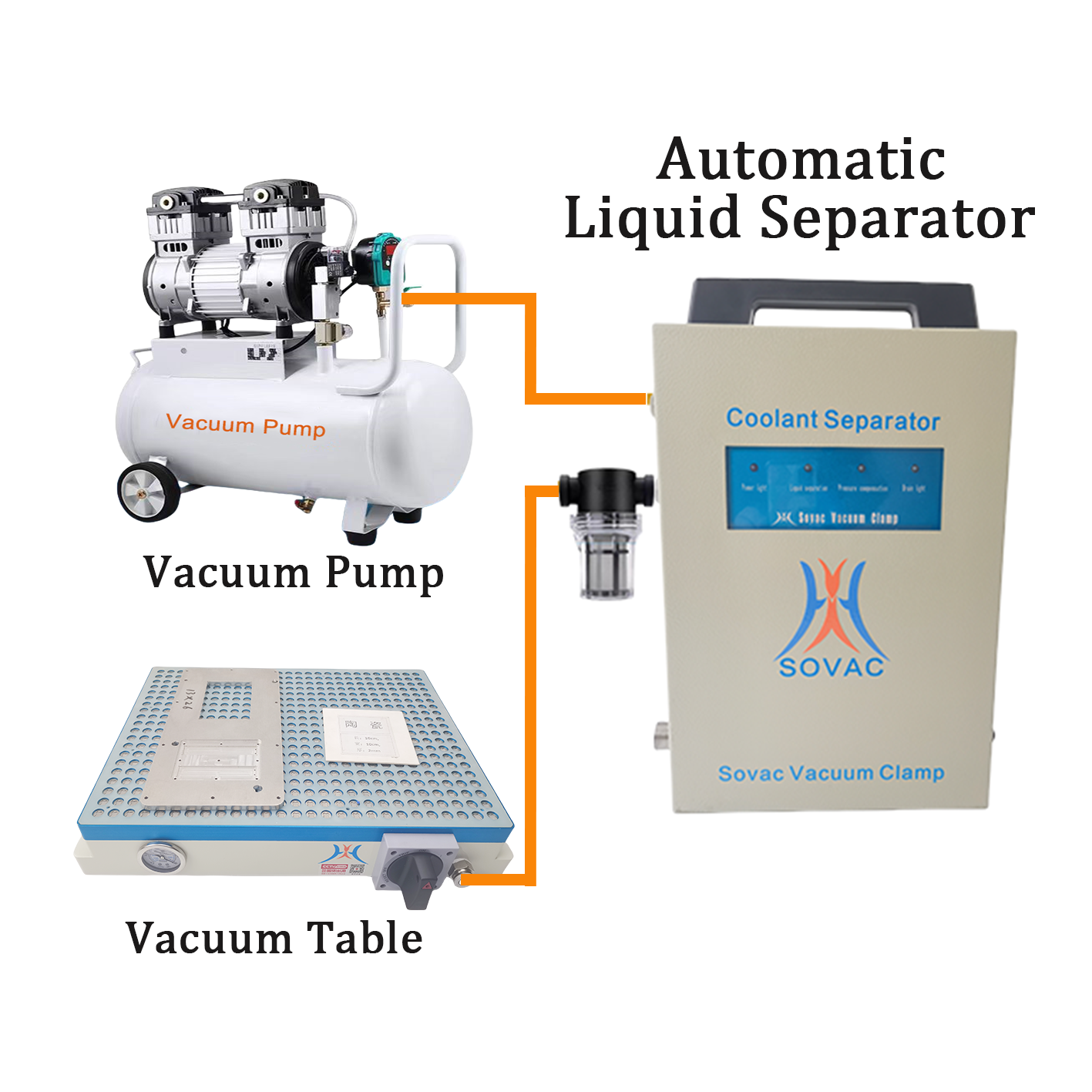
How is the automatic liquid trap for vacuum pump connected? The automatic liquid trap for vacuum pump is usually connected to the front section of the vacuum pump to separate the liquid in the vacuum pipeline in advance. It can also be connected to the bottom of a large liquid storage tank, where the liquid is first collected through the liquid storage tank, and then the liquid is pumped into the automatic liquid trap for vacuum pump and finally discharged. In the CNC processing industry, a vacuum table is sometimes used to clamp the workpiece. If there is only one CNC milling machine, we can connect the automatic liquid trap for vacuum pump to the front end of the vacuum pump. If multiple CNC milling machines are in use, the cutting fluid is generally collected in a large liquid storage tank. At this time, we can connect the automatic liquid trap for vacuum pump to the map of the liquid storage tank. Below are two equipment connection diagrams for reference.

Here are some technical parameters of the automatic liquid trap for vacuum pump for reference. But I need to remind potential users to pay attention to the vacuum flow rate in your vacuum pipeline and the liquid speed to be separated, and make sure that these two parameters of the automatic liquid trap for vacuum pump are greater than your vacuum flow rate and liquid separation speed. In this way, the use of automatic liquid trap for vacuum pump will not reduce the flow rate in the vacuum pipeline, and at the same time all the liquid can be separated cleanly.

Product name Automatic Liquid Trap for vacuum pump
ModelCS-SM-220
VoltageAC220V Single phase 50Hz 6W
Protection gradeIPX7
Drainage interval timeSetup free, adaptive adjustment
Maximum liquid separation rate5.2L/min(1.4GPM)
Maximum gas flow rate700L/min(25CFM)
Working temperature0~300℃(572°F)
Operating pressure range0~-100KPa(-750mmHg)
MaterialSUS304 stainless steel inner cavity, plastic-sprayed galvanized steel shell
Product weight22kg(48.5lb)
Packing weight25kg(55lb)
Dimension415mm×260mm×110mm

Miniature automatic liquid separator for vacuum pumps,The world’s smallest automatic liquid separator for vacuum pumps,Micro Automatic Liquid Separator for Vacuum Pumps,Portable Automatic Liquid Separator for Vacuum Pumps,Integrated Automatic Liquid Separator for Vacuum Pumps,Compact Automatic Liquid Separator for Vacuum Pumps,Miniature automatic liquid trap for vacuum pumps,The world’s smallest automatic liquid trap for vacuum pumps,Micro Automatic Liquid Trap for Vacuum Pumps,Portable Automatic Liquid Trap for Vacuum Pumps,Integrated Automatic Liquid Trap for Vacuum Pumps,Compact Automatic Liquid Trap for Vacuum Pumps

In some industrial fields, when we use vacuum pump for operation, if there are liquids being sucked inside the vacuum circuit, these liquids will be pumped to the inside of the vacuum pump, which will damage the normal work of the vacuum pump. So we must separate these liquids from the vacuum system by some liquid separating devices. If a small amount of liquid or atomized liquid, we can through the condensing device as well as a small volume of liquid storage cup or liquid storage tank can realize the liquid temporary collection. This is the case, for example, with the spray cooling system of some CNC routers. However, if the amount of liquid pumped into the vacuum system is large, we have to use a large volume liquid separator to separate the liquid from the vacuum. However, sometimes large volume liquid separator tanks are still not enough to meet the needs of use. Then we have to use an automatic liquid separator.

So for a large number of liquids need to be separated from the vacuum system, an automatic liquid separator for the vacuum pump will be a good choice. In the USA, usually called it vacuum liquid trap. In Europe, people used to call it vacuum coolant separator. In China, people used to call him vacuum automatic liquid separator. Of course, this is just a different name for each place. But this device plays the same role. In the case of not suspending the machining operation, automatically separate the cutting fluid from the vacuum hose or storage tank, and does not cause a reduction in vacuum pressure. The clamping force of the vacuum table is kept constant.

Vacuum pump automatic liquid separator is to utilize the principle that liquid is denser than air, and separate the liquid out with the help of gravity. Mainly through the separation and switching of multiple chambers to realize the separation of liquids without reducing the vacuum pressure. The principle is similar to that of the manual reservoir for separating liquids, but the liquid level sensor and solenoid valve switch realize the continuous automatic separation of liquids. In vacuum table use, due to the debris in the cutting fluid, it is necessary to install a filter cup at the front of the automatic liquid separator. This prevents these tiny solid debris from entering the interior of the liquid separator and reduces the service life of the liquid separator.

How does the vacuum pump automatic liquid separator work?

Vacuum pump automatic liquid separator is the use of liquid and air density principle, with the help of gravity will be separated out of the liquid. Mainly through the separation of multiple chambers and the solenoid valve switch, the liquid is collected and discharged separately without lowering the vacuum pressure. The entire vacuum line is not interrupted or stopped during the liquid separation process. When using this automatic liquid separator for vacuum pumps, care must be taken to ensure that there are no tiny debris particles in the liquid. If there are particles of debris, a filter cup for tiny debris must be installed at the front of the automatic liquid separator for vacuum pumps. This situation is more common in the CNC machining industry when using a vacuum table, cutting fluid mixed with solid particles, so you must install a filter cup for filtration.

What are the features of vacuum pump automatic liquid separator?

1.  The process of separating the liquid does not reduce the vacuum pressure.

2.  Small size and portable.

3.  Separate the liquid at the same time, can filter out the cutting debris.

4.  Separated liquid can be returned to the CNC milling machine sink.

5.  Low power consumption, energy saving and power saving.

6.  Stainless steel inner wall, the inner cavity will not rust in long term use.

7.  Affordable, won’t add much cost.

8.  No need to do any setup before use, just connect the power and air hose and use it.

9.  Fully automatic separation of liquids, the more liquids enter, the faster the separation of liquids.

Product Purchase Links: https://sovacuumclamp.com/vacuum-pump-automatic-liquid-separator/

Automatic liquid separator for vacuum pump purchase links
Scroll to Top
GET A QUOTE

Get an instant quote from our most experienced consultants.